Definition
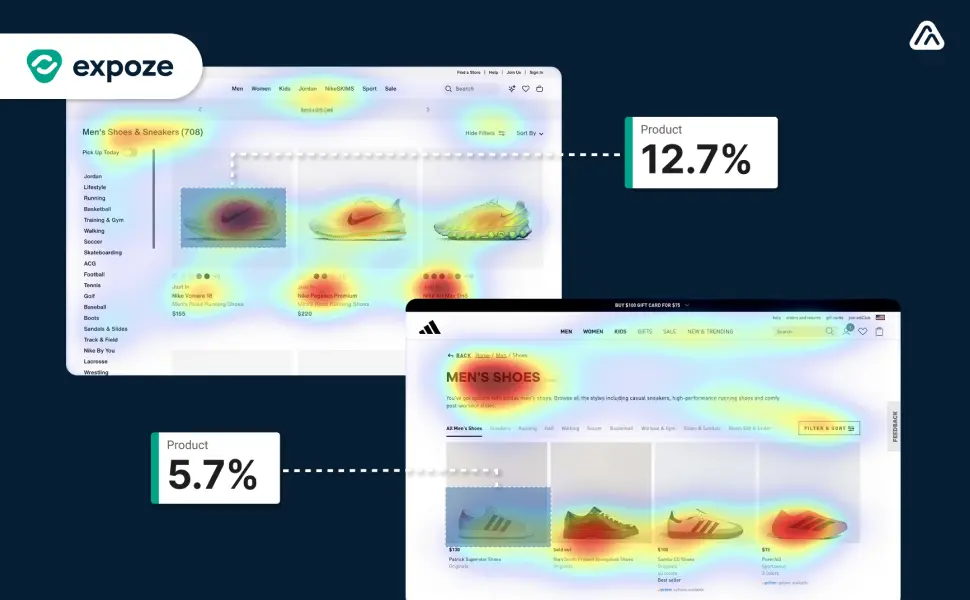
Ad Breakthrough refers to the degree to which an advertisement successfully commands immediate visual attention, cutting through environmental or digital clutter, and achieving cognitive encoding in the minds of target consumers. Rather than measuring simple impression delivery or technical viewability, ad breakthrough quantifies whether a creative asset possesses sufficient visual salience and narrative impact to trigger active viewer fixations within the first few seconds of exposure.
Key Components of Ad Breakthrough
Initial Visual Capture: The immediate speed (measured via Time to First Fixation) with which an ad secures foveal gaze in a cluttered media environment.
Creative Novelty & Contrast: Distinctive visual, structural, or auditory elements that break away from expected category norms to disrupt passive scrolling.
Cognitive Encoding: The active neurobiological processing of an ad's core message into working memory before viewer distraction or skip options occur.
Clutter Resistance: The capability of a creative asset to retain visual focus despite surrounding UI elements, rival ads, or competing media feeds.
Types of Media Applications for Ad Breakthrough
In-Feed Social & Display Ads: High-contrast, rapid-hook creative layouts engineered to capture gaze during high-speed vertical scrolling.
Digital Out-of-Home (DOOH): High-salience visual signage designed to capture instantaneous visual fixations in dense physical environments.
Pre-Roll Video Ads: Opening 3-second creative hooks tailored to maximize breakthrough before skip thresholds are reached.
Function
In neuromarketing and predictive visual analytics, measuring ad breakthrough enables advertisers to evaluate whether creative assets possess the stopping power required to yield a measurable return on ad spend (ROAS). Key functions include:
Overcoming Sensory Inattention: Consumers are exposed to thousands of commercial messages daily. Measuring breakthrough determines whether a creative asset overcomes cognitive filtering or falls victim to visual neglect.
Validating Pre-Launch Creative Mechanics: Utilizing predictive modeling during workflows like Display Ad Testing verifies that an ad's visual hierarchy commands attention before media budgets are deployed.
Optimizing Early Visual Salience: Ensuring that key brand assets achieve high Visual Salience within the opening frames maximizes immediate attention capture. (Link to Glossary: Visual Salience)
Distinguishing Viewability from Real Attention: Unlike standard viewability metrics that only verify an ad appeared on screen, evaluating breakthrough provides empirical proof of actual visual fixations, serving as a core pillar of modern Attention Metrics.
Mitigating Creative Fatigue: Tracking breakthrough performance over time helps media planners identify when ad creative stops capturing consumer attention and requires refreshment.
Example
Consider a consumer tech brand launching a new smart headphone line in a highly saturated social media feed. In the initial creative version, the ad opens with a subtle, dark-toned product shot slowly fading in over 4 seconds, accompanied by ambient background music. Then, when tested in a simulated social feed, eye-tracking analytics reveal an average Time to First Fixation of 2.8 seconds, with over 70% of test participants scrolling past the ad before the brand logo or product features appear.
To engineer ad breakthrough, the creative team optimizes the asset by instead, opening with a high-contrast, high-motion visual hook through a bold color flash accompanied by a close-up of the headphones featuring distinct metallic textures. Additionally, the brand logo and product name are integrated directly into the central focal path during the first 1.5 seconds. Upon re-testing, predictive attention modeling confirms a dramatic increase in ad breakthrough as the time to first fixation drops to 310 milliseconds, while visual attention density on the central product shot increases by 240% during the opening 2 seconds.
.webp)
%201.webp)