
Connected TV (CTV) advertising bridges the high-impact visual reach of traditional linear television with the precise targeting and measurement of digital marketing; US CTV ad spending is projected to reach $37.95 billion in 2026, making it the fastest-growing major ad channel. Additionally, marketers reallocated 36% of their linear TV ad budgets to CTV over the past year, driving a structural collapse in traditional broadcast TV prime-time ad revenues. So, below, we break down what Connected TV is, how CTV differs from OTT, and the key steps to optimize your CTV video ads for maximum attention and performance.
Key Takeaways
- Record Spend Growth: CTV ad spend is growing at 14–15% annually, on track to surpass traditional linear TV spending by 2028.
- Dominant Viewing Share: Streaming now accounts for 47.3% of total US TV viewing, compared to cable (below 27%) and broadcast (20%).
- High Co-Viewing Impact: Nearly 47% of CTV consumption occurs in groups, driving a +13% higher attention index than traditional single-viewer formats.
What Is Connected TV (CTV) Advertising?
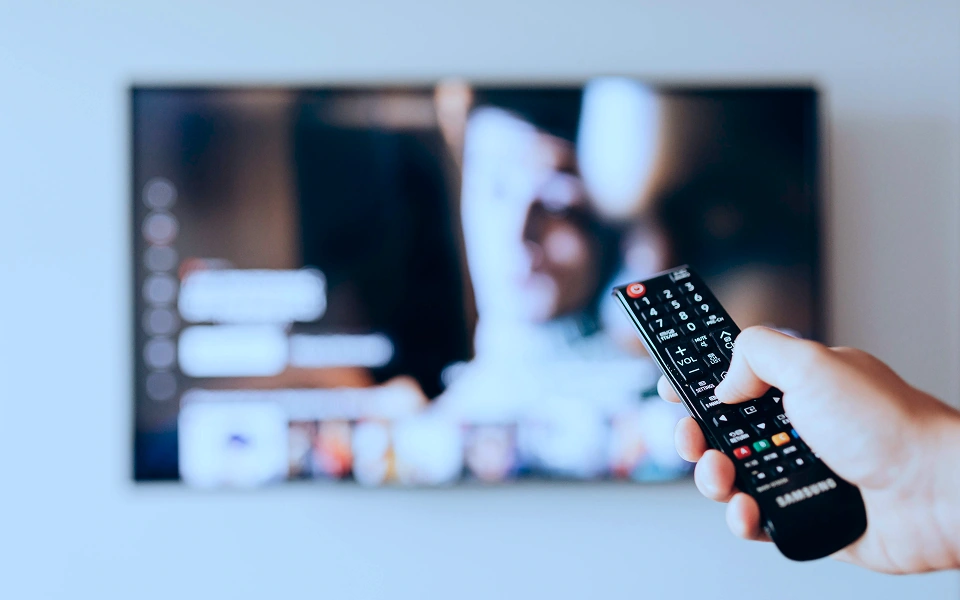
Connected TV (CTV) refers to any television set connected to the internet that streams video content beyond standard terrestrial broadcast or cable networks. This includes Smart TVs (e.g., Samsung, LG, Sony) and TVs connected via digital media players (e.g., Apple TV, Roku, Amazon Fire TV, or gaming consoles like PlayStation and Xbox).
CTV vs. OTT: What is the Difference?
While often used interchangeably, there is an important technical distinction:
- Over-The-Top (OTT): Refers to the content distribution mechanism (such as Netflix, YouTube, Disney+, etc.), which is video content delivered over the internet rather than traditional cable or satellite.
- Connected TV (CTV): Refers to the physical device (such as a Smart TV, Roku, Apple TV, etc.), which is **the actual internet-connected television screen in the living room where OTT content is consumed.
1. Design Creative Specifically for Living-Room Viewing
The Co-Viewing & Second-Screen Challenge
Unlike mobile video viewing , where a single user sits inches from a vertical screen, CTV viewing often occurs in living rooms with multiple people present. Research shows that 47% of CTV content is co-viewed by two or more people. While co-viewing audiences exhibit a +13% higher attention index than linear TV viewers, distraction remains high: 69% of UK and US viewers actively use a smartphone as a second screen while watching CTV.
Keeping Visuals Clear and Focused
- Simplify Visual Complexity: High visual clutter increases cognitive load, making viewers jump to their mobile feeds.
- Maintain High Cognitive Ease: Clear, focused imagery with a single focal point increases brand retention and drives a 33% boost in brand recall.
- Position Distinctive Brand Assets: Place your logo, brand colors, and core product visuals prominently within the central visual frame during the first 15 seconds.
2. Eliminate the "Vampire Effect" in High-Production Spots
Why Dramatic TV Spots Fail to Drive Recall
A frequent creative pitfall in CTV advertising is the vampire effect: a video commercial is emotional, cinematic, or humorous, but the brand itself gets overshadowed by the narrative arc. Viewers remember the dramatic story, but completely forget which brand sponsored the message.
Measuring Brand Attention with AI
To protect your CTV media investment, verify that viewers actively absorb your brand elements during key moments:
- Brand Attention Scoring: Use junbi to calculate second-by-second visual attention metrics on your video assets, confirming that gaze duration lands squarely on your logo and key packaging.
- Interactive & Shoppable Overlay Testing: With 41.8% of US marketers adopting interactive CTV formats (such as QR codes and shoppable overlays that increase viewer time by 71 seconds), use expoze heatmaps to ensure companion CTAs drive immediate visual focus without obstructing core storytelling.
3. Leverage Digital Audience Signals & Frequency Capping
Move Beyond Broad Demographic Buying
Traditional linear TV buying forced advertisers to purchase broad network slots based on general age and gender demographics, while connected TV advertising allows media buyers to leverage digital targeting capabilities, with 60% of marketers deploying behavioral CTV targeting:
- In-Market Audience Signals: Target households actively researching products in your category across search engine ecosystems.
- Frequency Capping: Limit the number of times a single household sees your CTV ad to prevent ad fatigue and wasted media spend.
- Sequential Video Messaging: Serve an initial CTV brand awareness spot on the big screen, followed by retargeted direct-response ads on secondary mobile devices, a strategy that yields a 32% increase in total audience reach.
Conclusion: Transform Living-Room CTV Ads into High-ROAS Engines
Connected TV advertising offers an unprecedented opportunity to combine big-screen brand storytelling with performance-driven digital precision. With CTV ad spend projected to surpass $52 billion by 2029, brands that master living-room attention mechanics will systematically outperform competitors relying on legacy broadcast tactics.
Achieving high ROAS on CTV requires moving beyond subjective creative feedback which can be done by pairing digital intent targeting with pre-flight predictive AI testing from junbi and expoze. This way, marketing teams can benchmark visual stopping power, eliminate cognitive friction, and ensure every living-room impression builds lasting brand recall.
Optimize Your CTV Creative Today
Ready to elevate your Connected TV ad performance?
- Book a junbi demo to benchmark your TV and video creative against industry standards before going live.
- Try expoze to instantly generate attention heatmaps for interactive TV graphics and static display overlays.
References
Abarinova, M. (2023, September 26). Consumers more likely to co-view on connected TV than linear – study. StreamTV Insider. https://www.streamtvinsider.com/video/consumers-more-likely-co-view-connected-tv-linear-study
Bhandari, G. (2026, February 12). Future of advertising: What happens between 2026 and 2030. Xapads Blog. https://blog.xapads.com/what-does-the-future-of-advertising-look-like/
EMARKETER. (n.d.-a). FAQ on CTV advertising: Trends, formats, and platforms to watch in 2026. https://www.emarketer.com/content/faq-on-ctv-advertising--trends--formats--platforms-watch-2026
EMARKETER. (n.d.-b). Measurement maturity: Curation takes center stage. https://www.emarketer.com/content/measurement-maturity--curation-s-center-stage
Karrer, F. (2026). Two-thirds of U.S. viewers will watch TV with a second screen in 2026. MNTN Research. https://research.mountain.com/insights/two-thirds-of-u-s-viewers-will-watch-tv-with-a-second-screen-in-2026/
Nielsen. (2025, August 19). Streaming cranks up the heat in July, accounts for nearly half of all TV viewing in Nielsen's The Gauge™. https://www.nielsen.com/news-center/2025/streaming-cranks-up-the-heat-in-july-accounts-for-nearly-half-of-all-tv-viewing-in-nielsens-the-gauge/
Ritchie, M. (2026, March 30). Linear TV vs. Connected TV: Differences, benefits, and strategies. StackAdapt. https://www.stackadapt.com/resources/blog/linear-tv-vs-connected-tv
Senal News. (n.d.). Unlocking the power of targeted advertising in a fragmented media landscape. https://senalnews.com/en/data/unlocking-the-power-of-targeted-advertising-in-a-fragmented-media-landscape
SHNO. (2026). Brand marketing statistics for 2026. https://www.shno.co/marketing-statistics/brand-marketing-statistics
StackAdapt. (n.d.-a). Connected TV stats. https://www.stackadapt.com/resources/blog/connected-tv-stats
StackAdapt. (n.d.-b). CTV political advertising. https://www.stackadapt.com/resources/blog/ctv-political-advertising